
Often overshadowed by Istanbul’s size and glamour, Ankara is omitted from many travellers’ itineraries. Yet what the Turkish capital lacked in appearance was compensated for by an incredible amount of culture and history.
Drawing comparisons between Ankara and Istanbul is like comparing apples and oranges. One is a maritime city surrounded by vast bodies of water; the other is like an outpost spread across the hills and plains of Central Anatolia. One is famous for its regal and cosmopolitan vibe; the other is known for its ascetic beauty that fits its role as Türkiye’s political center. But more often than not, travellers prefer Istanbul over Ankara, simply because of its popularity and accessibility. In fact, many even mistake the city by the Bosporus Strait as the capital of Türkiye.
An incredible amount of culture and history.
Surprisingly, overlooked Ankara seems to have the upper hand when it comes to history. When present Istanbul, then the Roman town of Byzantium, was being revamped as New Rome in the 4th century, Ankara was already a major urban center, though not a capital, of several ancient civilizations. The Hatti settled here in the Bronze Age, succeeded by the Hittites in the second millennium BC, the Phrygians in the 10th BC, the Lydians, the Persians, the Greeks, the Galatians, and the Romans. The city grew into an imperial resort and a fortified stronghold during the long Byzantine reign, before briefly falling to the Seljuks and later to the Ottoman Empire by the mid-14th century.
Following the Ottoman downfall in World War I, a Turkish nationalist movement, under Kemal Atatürk, took shape, with its headquarters in Ankara in 1920. They successfully drove the occupation force away, leading to the establishment of the Republic on 29 October 1923. And since then, Ankara has been the capital of a modern Türkiye.
1. Museum of Anatolian Civilizations
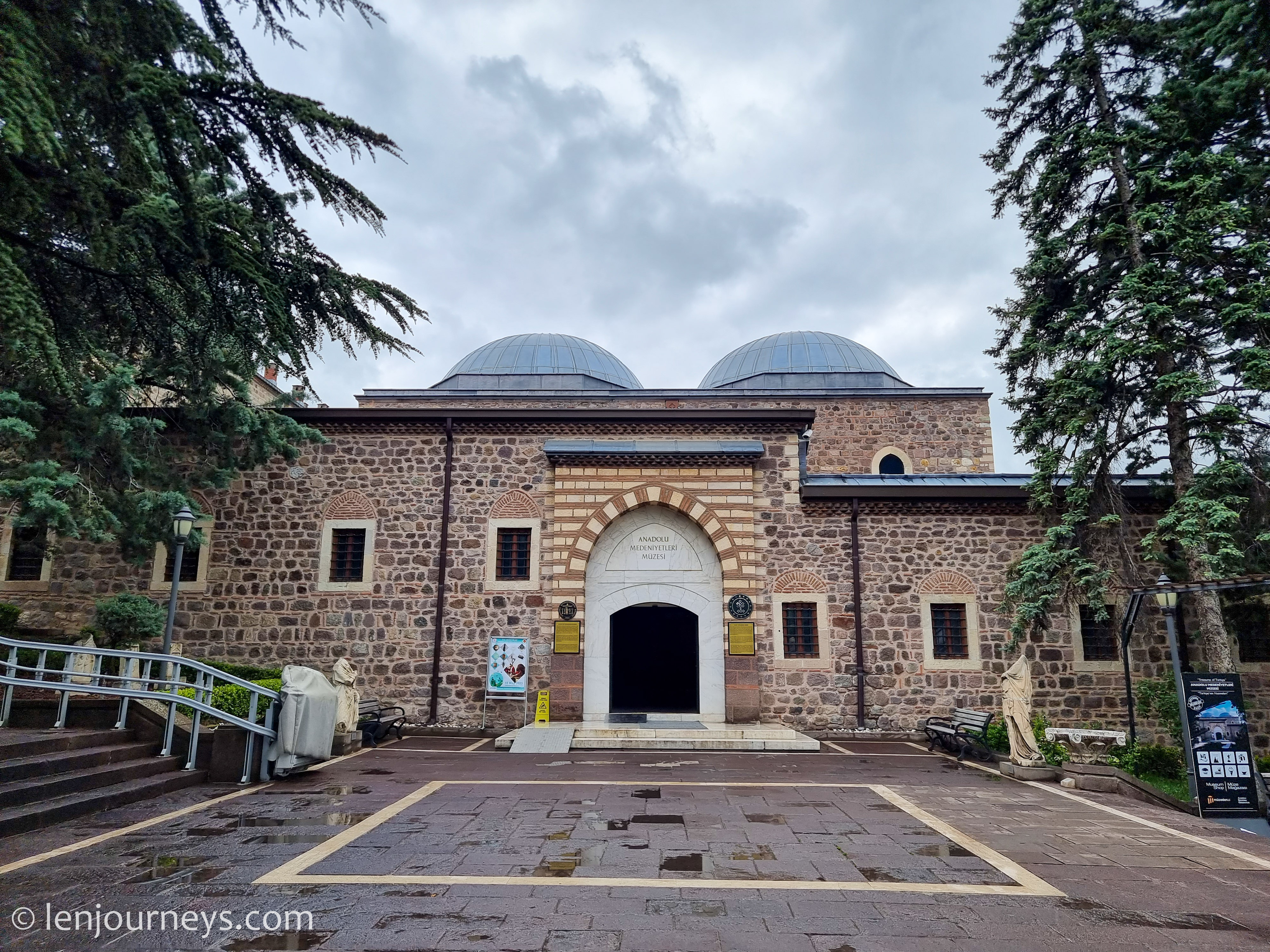
There is no better place in Ankara, or even the whole country, to get a grip of Türkiye’s complex history than the Museum of Anatolian Civilizations – an absolute treasure trove with exhibits cherry-picked from nearly every prominent archaeological site across Anatolia. The collection is displayed in a 15th-century garment bazaar believed to have been built by Mahmut Pasha, one of the viziers of Mehmed II. It has the classical Ottoman style, featuring ten brick domes covering a rectangular enclosed area. By the late 1930s, the bazaar underwent remodelling and an extensive restoration before opening to the public as a museum in 1968.
A treasure trove with exhibits selected from across Anatolia.
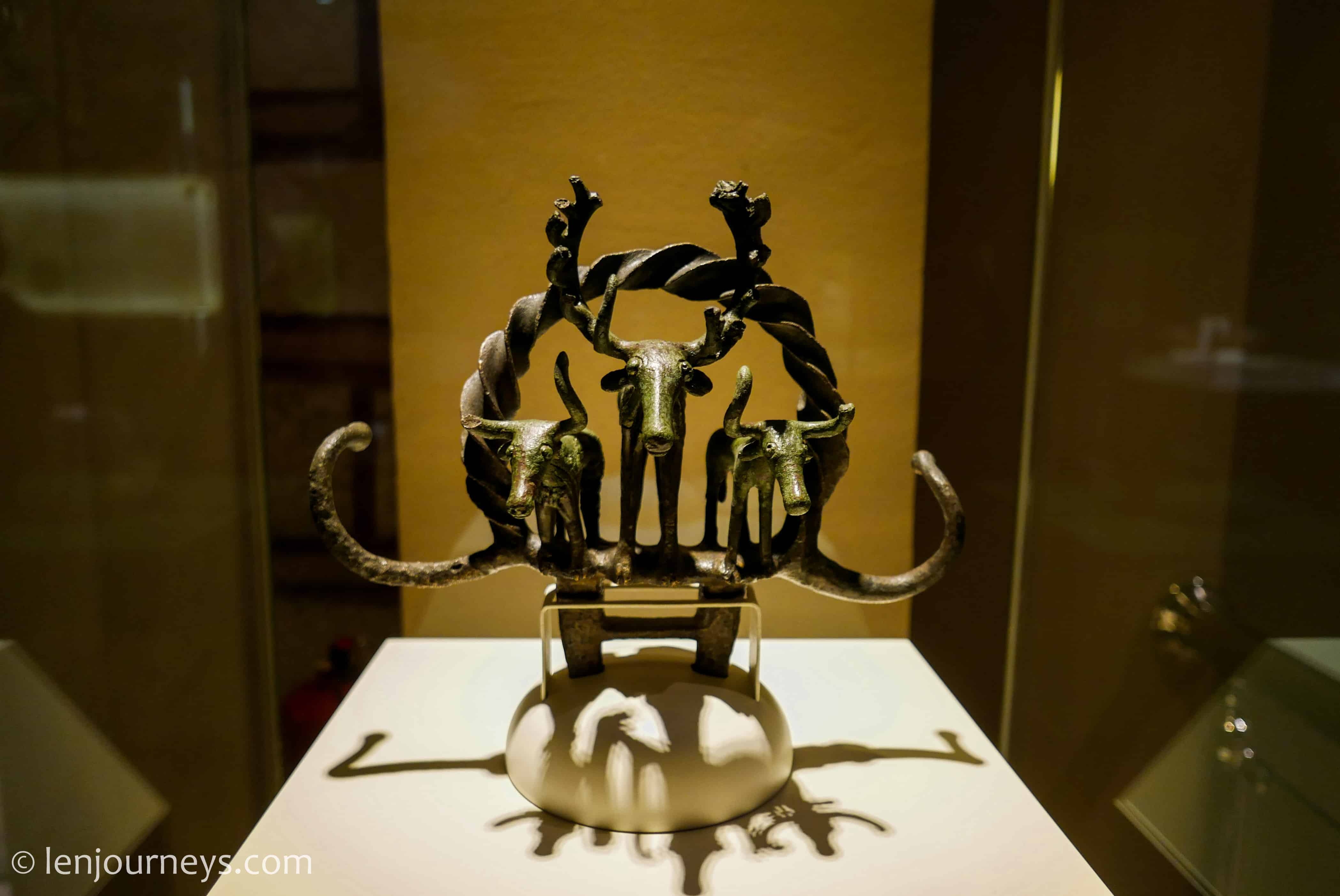
The first thing that impressed me was the dozens of incredibly well-preserved limestone slabs, reliefs, and statues located in the large central hall. Some were intricately carved with hieroglyphic inscriptions, while others vividly illustrate deities, mythological creatures, and scenes from the distant past, such as farming and chariot racing. To the right of this hall are items discovered at one of the world’s most important Neolithic sites – Çatalhöyük, near Konya – including decorative bull heads, a town map in the form of a mural, and a baked-clay sculpture of a fertile Mother goddess. The Bronze Age collection follows, with detailed cuneiform tablets, animal-headed drinking vessels, striking figures of bulls and stags, and bizarre solar discs – once the symbol of the Turkish capital.
My time journey continues with Iron Age artefacts, including exquisite Phrygian metalworks such as lion- and ram-head ritual vessels, and refined Urartian inlaid wooden furniture. Then, the exhibitions led me chronologically through the Classical Antiquity, Byzantine, Seljuk, and Ottoman periods. There are also displays of Roman artefacts and coins unearthed in and around Ankara in the basement.


2. Ankara Castle
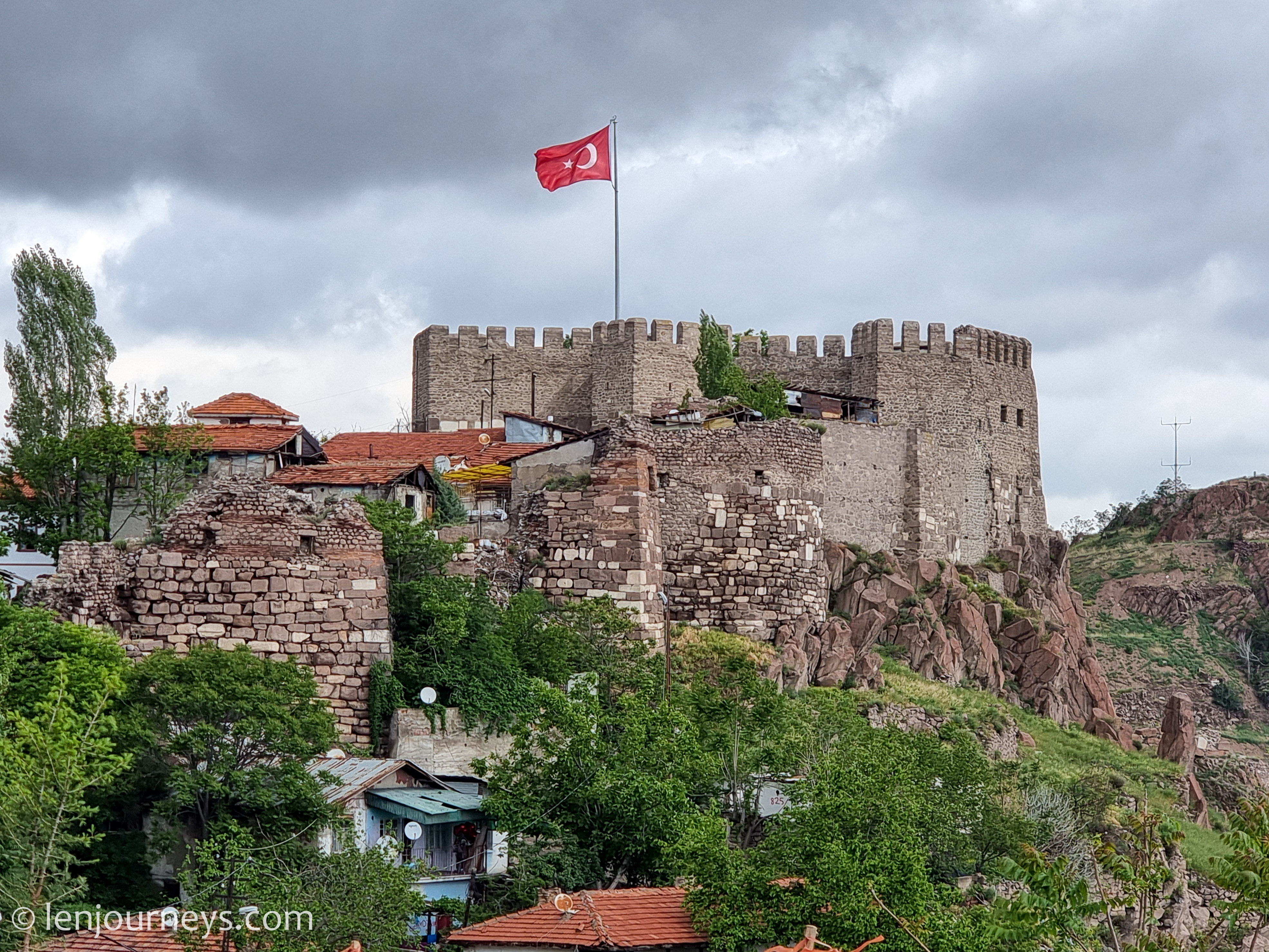
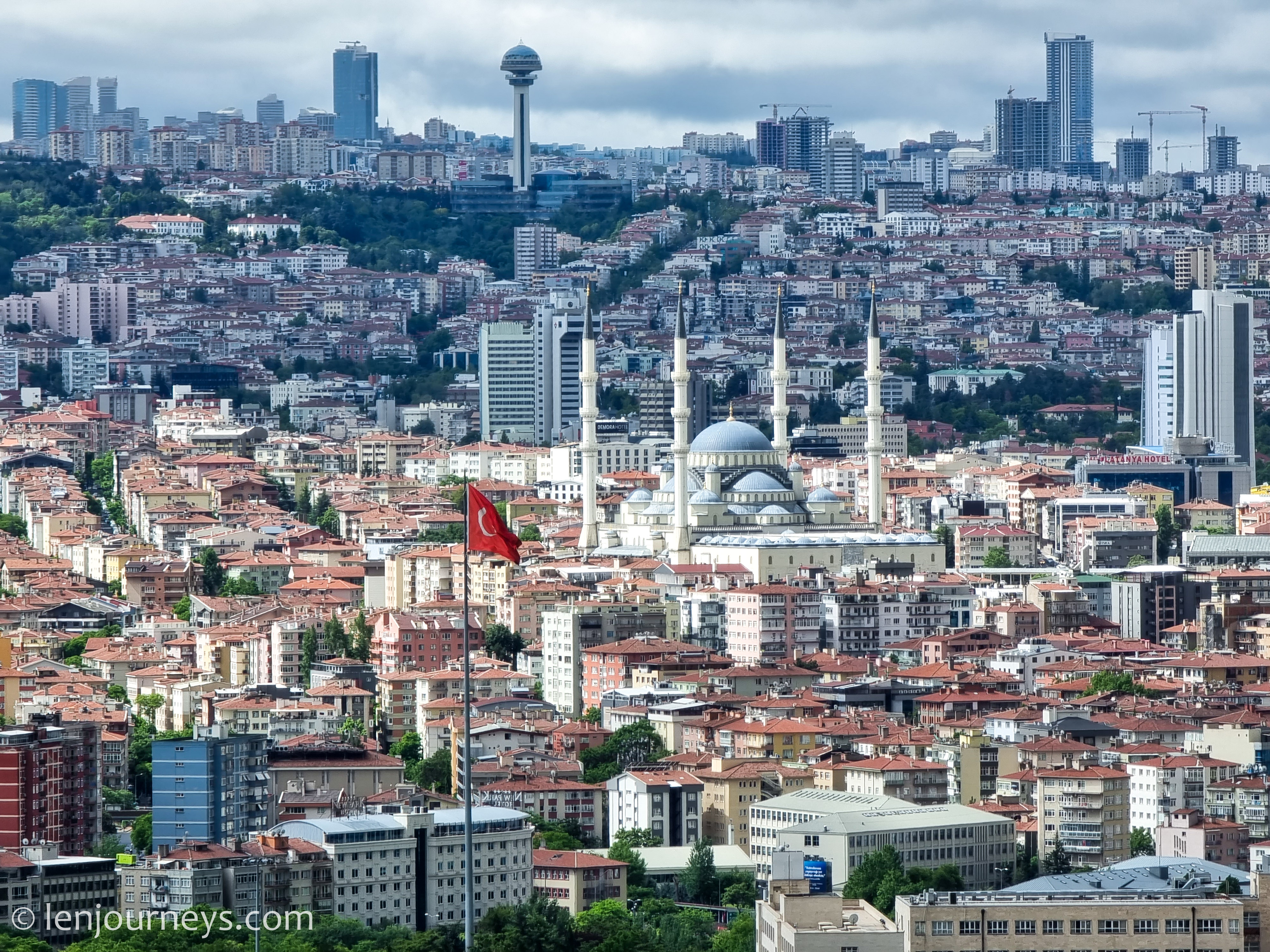
The Museum of Anatolian Civilizations was part of Ankara Castle, an ancient fortification that protrudes over the capital’s historic core. It stands atop a rocky hill that rises 150 meters above the lively lanes and comprises two thick defensive lines constructed from recycled masonry. While the outer walls have twenty watchtowers, twice the number are dotted along the inner walls. From the ramparts, one can have a sweeping view over Ankara, with orange-tiled roofs and slender minarets tumbling down the hillside, and newer buildings stretching outward over the horizon.
The Phrygians reportedly founded this fort around the 7th century BCE, yet it became a complete castle only during Roman reign. However, few of these outworks have survived. Most of the walls now date from the Byzantine era, around the 7th – 9th century, when Ankara stood near the frontier between the Byzantine Empire and the Arab Caliphates. One could see the urgency in the construction, reflected in the unusual short interval between the watchtowers, the dense wall sections, and the reuse of stones drawn from temples and public buildings. When the Seljuks and later Ottomans arrived, they made restorations and additions, with each layer settling over the last.


3. Anıtkabir
Another landmark of Ankara is Anıtkabir – the final resting place of Mustafa Kemal Atatürk, the first president of the Turkish Republic. This national hero successfully united the Turks, by then on the verge of crisis following the collapse of the Ottoman Empire, to forge a secular, industrializing country, without foreign interference. He died in 1938, at the age of 57, in Istanbul, yet his mausoleum wasn’t completed until fifteen years later.
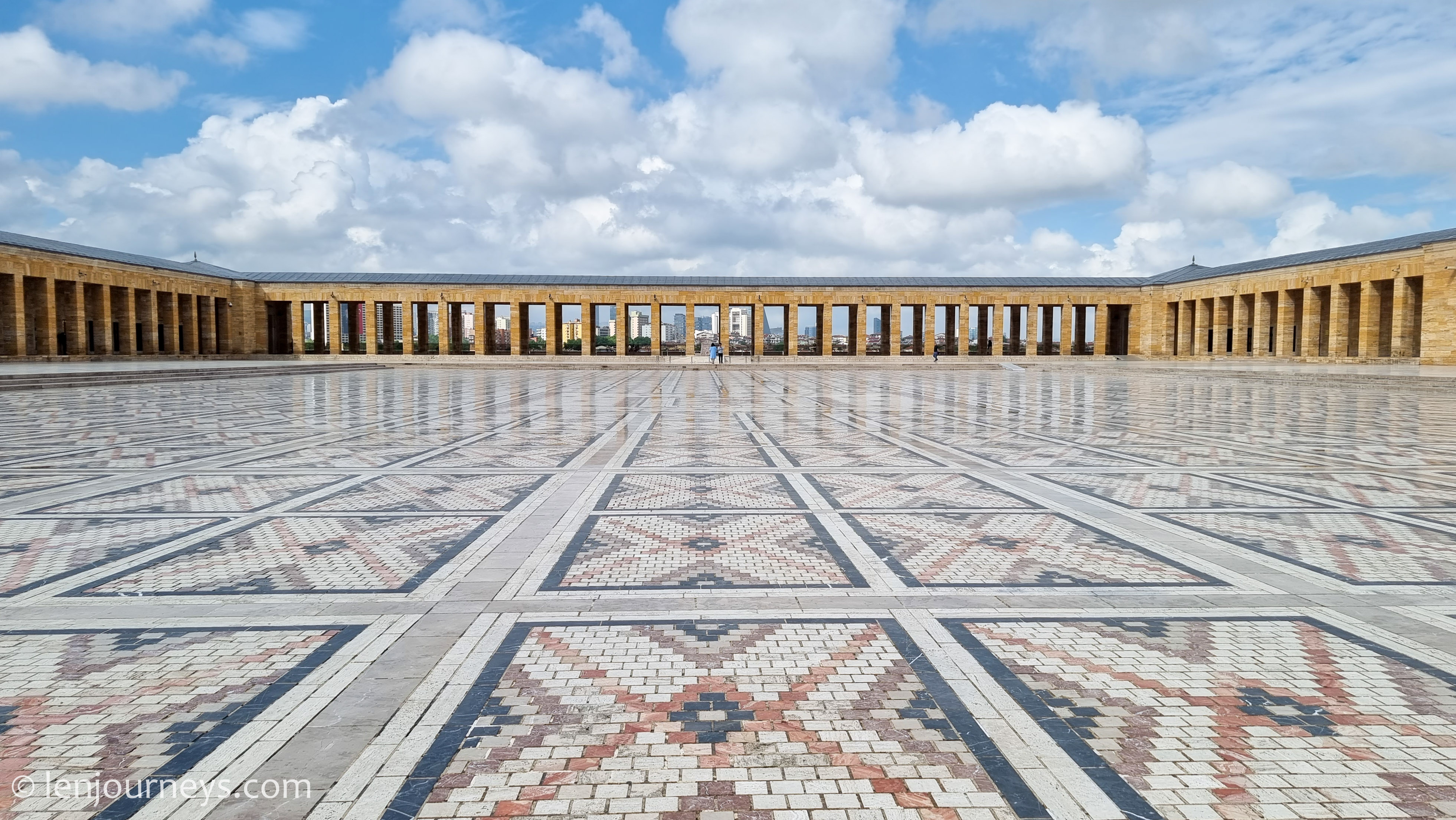
With an air of reverence and the ample amount of stonework, it would be forgiven to mistake this stately mausoleum for an ancient temple. Its design is fairly simple, featuring an elevated rectangular structure, surrounded by 44 symmetrical columns. All are made of concrete and clad with porous travertine in various shades of yellow. A lofty hall adorned with mosaics and colorful marbles awaits inside, where the 40-ton symbolic stone sarcophagus is positioned. The real tomb, however, is in a chamber right beneath it.
Final resting place of the Founding Father of modern Türkiye.
The mausoleum is the central piece of a vast complex that contains an equally grand ceremonial courtyard, a pedestrian road lined with Hittite-style stone lions, and a woodland called Peace Park. All straddles a hill with sweeping views over the Turkish capital. Upon completion, Anıtkabir is considered a stellar example of the National Architecture Movement, in which modern architectural principles are combined with ancient Anatolian, Seljuk, and Ottoman decorative details.
Good to Know: There is a museum adjacent to the mausoleum that displays artifacts and memorabilia related to the President and the country’s establishment.



4. Ethnography Museum
Before Anıtkabir was constructed, the President was temporarily laid to rest in the Ankara Ethnography Museum. It’s the first museum built in the new Republic, and like the Anıtkabir, it follows the National Architecture style, featuring a rectangular sandstone structure with two symmetrical wings. An Ottoman dome surmounts the central block, while a marble pediment and columns adorn the entrance.
Despite its small scale, Ankara Ethnography Museum showcases the country’s rich artistic heritage through an extensive collection of folkloric items and artifacts from the Seljuk and Ottoman eras. Highlights include Anatolian bridal dresses, shoes and jewelry, Seljuk and Iznik ceramics, as well as Ottoman calligraphies and woodenworks, including the intricately carved minbar and mosque door.


5. Art and Sculpture Museum
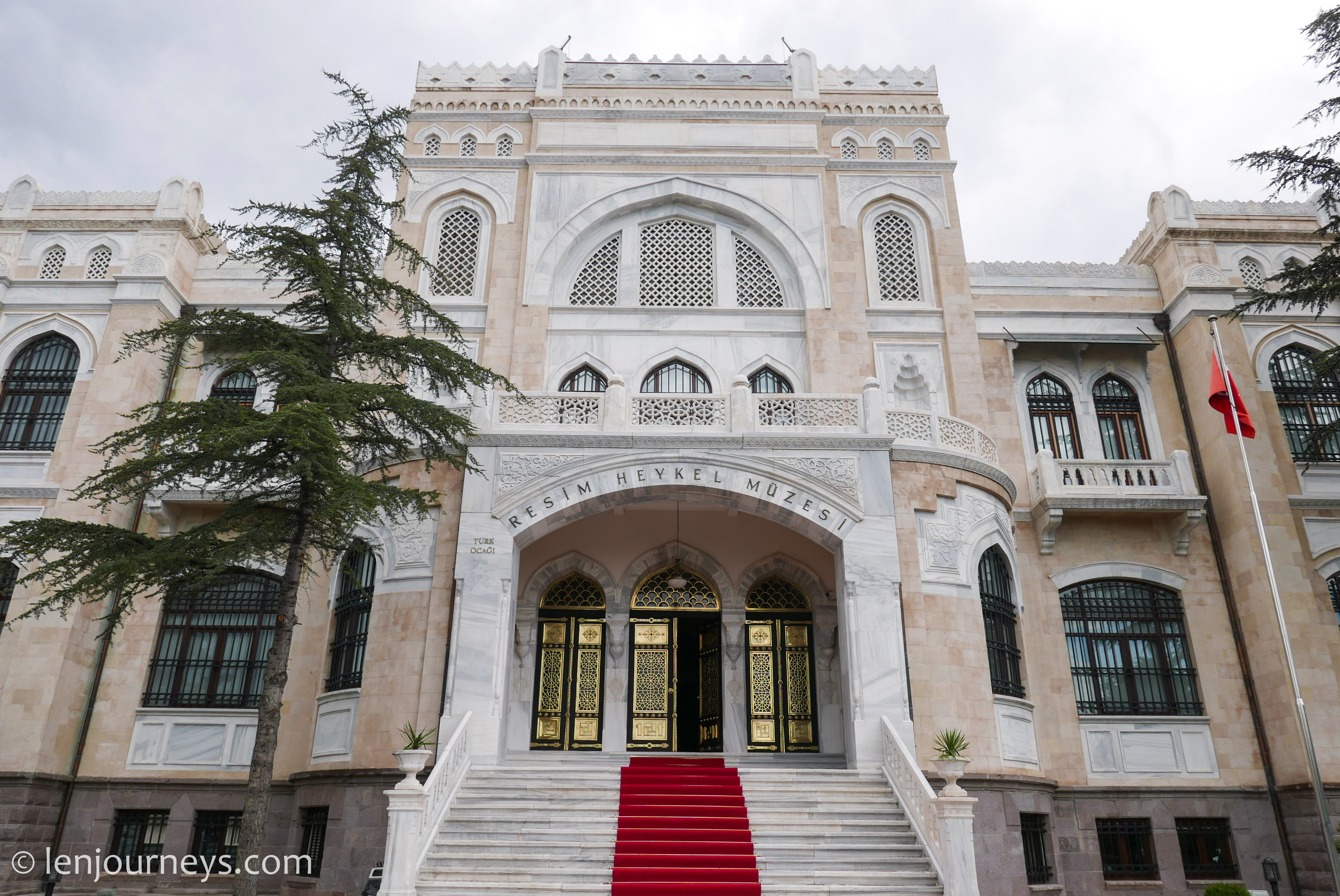
To the left of the Ethnography Museum stands the State Art and Sculpture Museum, Ankara’s temple of fine art. It has been open to the public since the beginning of the 1980s, presenting an eclectic mix of paintings and sculptures created by Turkish artists from the late 19th century onwards.
The intrigue collection is housed in a palatial building that once served as the headquarters of the Turkish Hearth, a non-governmental organization dedicated to promoting Turkish culture and language. It has the same architectural style as the next-door museum, featuring a modern structure adorned with intricate Seljuk and Ottoman ornaments. Marble is primarily used for decoration, reflected in the elaborate facade, the staircase, the latticed balconies, and the foyer.
Good to Know: One particular room that shouldn’t be missed is the Turkish Hall. Once the meeting place between Atatürk and foreign guests, this well-preserved room is fully embellished with elaborate motifs found in traditional Turkish houses.


Tips for Visiting Ankara
- As most attractions in Ankara are located on hills, Uber or taxis are highly recommended. In comparison to their counterparts in Istanbul, Ankara drivers are more reliable.
- Alternatively, you can take the metro and then walk uphill to the destinations. The metro network in Ankara is fairly new and convenient.
- From Ankara, it’s easy to take buses to Cappadocia or the Black Sea region, including the picturesque town of Safranbolu.


It is indeed quite rare to read a blog post on Ankara. The Turkish capital does seem to have excellent museums, which for people like me can be enough reason to visit a place. I wonder if you saw as many cats in Ankara as you did in Istanbul.
I don’t recall seeing any cat in Ankara 🙂 It was raining on and off, so the cats might not come out at all. But there were a lot of dogs (maybe strayed) near the castle. Quite scary to pass them, as they straddled across the narrow street.